

2 saat önce
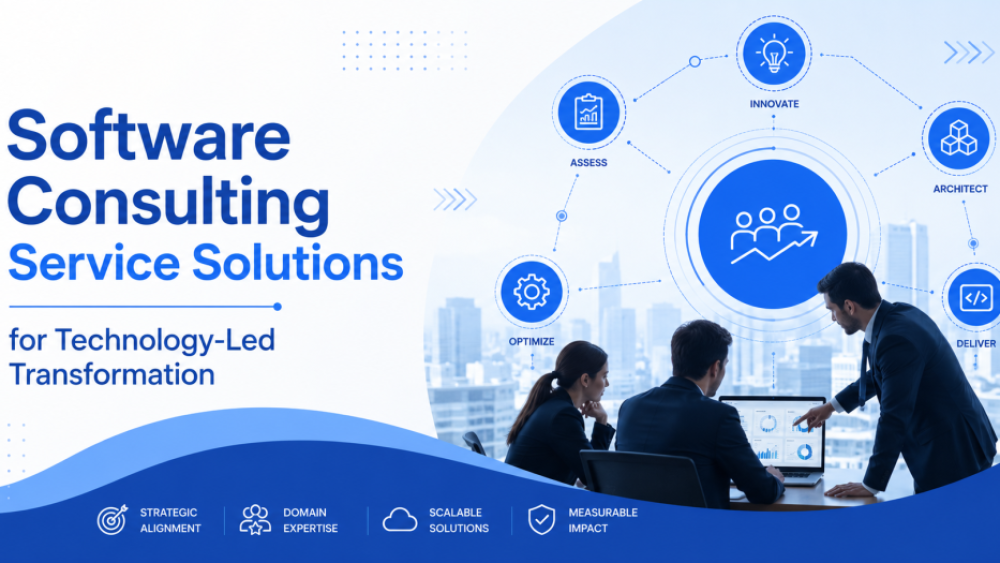


Most transformation initiatives don't fail because companies lack ambition or budget. They fail because the technology decisions made early on were disconnected from the actual business problem leadership was trying to solve. A company invests heavily in new systems, new platforms, new automation — and eighteen months later, the metrics haven't moved the way anyone expected. This isn't a technology problem. It's a strategy gap, and it's exactly the gap that exists between simply buying software and genuinely transforming how a business operates.
This is where Software consulting services earn their place at the leadership table rather than being treated as an IT line item. Real consulting isn't about recommending tools — it's about understanding why your current processes create friction, where technology can remove that friction without creating new bottlenecks, and how to sequence changes so the business doesn't grind to a halt during the transition. Business owners who approach this correctly tend to see compounding returns, while those who treat it as a vendor purchase often end up with expensive software nobody actually uses the way it was intended.
There's a particular trap that catches even experienced business owners: deciding on a software solution first, then trying to retrofit strategy around it. This sequence almost always produces disappointing results because the software ends up dictating how the business operates, rather than the business's actual needs shaping what gets built or bought. Good consulting flips this order entirely. It starts with mapping your current operational reality — the actual workflows, the actual pain points, the actual data your teams are working with — before any conversation about specific platforms or tools even begins.
This distinction matters enormously because the cost of reversing a bad technology decision rises sharply the longer it stays embedded in daily operations. Teams build habits around flawed systems, data gets trapped in formats that are hard to migrate, and what should have been a six-month course correction turns into a multi-year unwinding process. Getting the sequence right from day one saves companies from this entire category of pain.
Off-the-shelf software solves generic problems reasonably well, but most businesses don't have entirely generic problems — they have specific workflows, specific compliance requirements, and specific customer expectations that don't fit neatly into a one-size-fits-all platform. This is exactly the gap that Custom software consulting services are designed to close. Rather than forcing your business to adapt to the limitations of a pre-built tool, custom consulting starts from your actual operational requirements and builds or configures solutions that fit how your business genuinely works, not how a software vendor assumed a generic business in your industry would work.
The advantage compounds over time. A custom-fitted system tends to require less workaround logic, fewer manual patches, and less employee frustration than a generic platform stretched to cover use cases it wasn't built for. Business owners sometimes hesitate here because custom work appears more expensive upfront, but the long-term cost of forcing a poor-fit generic solution into daily operations frequently exceeds the investment in something built correctly from the start.
A few years ago, technology-led transformation mostly meant moving processes to the cloud or replacing legacy systems with modern equivalents. That definition has expanded significantly. Today, AI Strategy & Consulting sits at the center of how forward-thinking businesses think about transformation, because artificial intelligence has moved from an experimental add-on to a core capability that reshapes how decisions get made, how customer interactions get handled, and how operational efficiency gets measured. The businesses gaining real advantage right now aren't the ones simply bolting AI features onto existing products — they're the ones rethinking entire workflows around what's now possible.
The challenge for most business owners isn't recognizing that AI matters; it's figuring out where it actually creates value for their specific business versus where it's just noise driven by industry hype. This is precisely the judgment that good AI strategy consulting brings to the table — separating genuine opportunity from trend-chasing, and building a roadmap that introduces AI capabilities where they solve real problems rather than where they sound impressive in a board presentation.
A significant portion of technology-led transformation work happening for businesses across the world today runs through Software consulting services India provides, and this isn't accidental. Indian consulting firms have built deep technical expertise over decades of serving global clients across nearly every industry vertical, while also offering a cost structure that allows businesses to invest more aggressively in the strategic and design phases of transformation rather than spending most of the budget purely on execution. For business owners trying to maximize transformation impact without unlimited budgets, this geography has become a genuinely strategic option rather than simply a cost-saving shortcut.
What makes this model work well in practice is the maturity that established Indian consulting firms have developed around remote collaboration, structured project governance, and clear communication protocols that bridge time zone and cultural differences effectively. Businesses that approach this as a genuine strategic partnership, with proper onboarding and shared accountability structures, tend to get outcomes on par with — and sometimes exceeding — what they'd get from purely domestic engagements.
With so many firms competing for attention, it's worth being precise about what genuinely separates strong consulting partners from the rest, rather than relying on marketing claims alone. The Best software consulting company in India distinguishes itself not through the size of its portfolio, but through the depth of its discovery process, the honesty of its recommendations even when those recommendations mean less revenue for the firm itself, and its ability to translate technical possibility into business outcomes leadership actually cares about. A consulting partner worth trusting will sometimes tell you that you don't need the expensive solution you walked in asking for, because a simpler fix solves the actual problem more effectively.
This level of trustworthiness is rare, which is exactly why it's worth prioritizing during vendor evaluation. Business owners should look past slick case study presentations and instead ask pointed questions about how a firm has handled projects that didn't go as planned, how transparently they communicate setbacks, and whether their recommendations have historically aligned with client outcomes rather than their own billing incentives.
Technology-led transformation isn't a single project with a defined end date — it's an ongoing capability that businesses need to build into how they operate continuously, especially as markets, customer expectations, and available tools keep shifting underneath them. The companies that handle this well treat consulting partnerships as long-term strategic relationships rather than one-time engagements, revisiting their technology roadmap regularly rather than assuming last year's transformation plan still fits this year's business reality.
For business owners evaluating where to start, the most productive first step is rarely choosing a specific software platform. It's finding a consulting partner who will spend real time understanding your business before recommending anything at all, and who measures their own success by whether your operational outcomes actually improved rather than by how many features got delivered on schedule. That distinction, more than any specific tool or platform, is what separates transformation that sticks from transformation that quietly fades within a year.












 Burun Düzleştirici
 Antalyaspor 0 - 1 Alanyaspor MAÇ ÖZETi (Ziraat Türkiye Kupası Yarı Final İlk Maçı)
 Denizli, Voleybol 2. Lig müsabakalarına ev sahipliği yapıyor
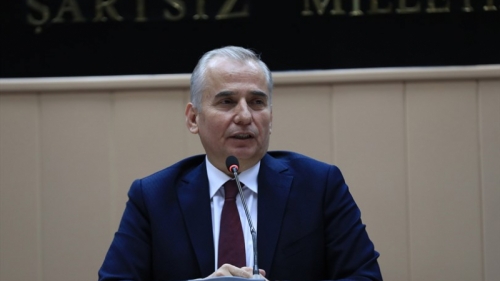 Başkan Osman Zolan’dan taziye mesajı
 Lyon 1 - 0 Juventus (Maç Özeti)